



An unprecedented public-private alliance model places the Republic of Georgia on the map of sovereign digital money
Georgia’s legal framework was designed to be compatible with emerging U.S. regulation (the GENIUS Act), which established the first federal framework for payment stablecoins.
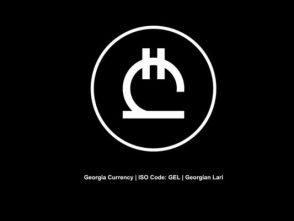
On May 25, 2026, Tether announced something that goes beyond launching a new token: a formal partnership with the Government of Georgia to issue GELT, a stablecoin pegged to the Georgian lari (GEL). The news carries major significance: the world’s largest stablecoin issuer — with USDT’s market capitalization now approaching $190 billion — has signed an agreement with a sovereign state to place its national currency onto digital rails.
The focus is political and structural: for the first time, a government is co-designing a stablecoin backed by its own currency together with a private issuer. And that changes the rules of the game.
Not a CBDC, but not just another private token either
The distinction matters. A central bank digital currency (CBDC) is a direct liability of the state. GELT is not: it will be a private instrument issued by Tether, backed by lari reserves, within a regulatory framework designed by Georgian authorities.
But that distinction does not make the project any less significant. Quite the opposite: the government and the National Bank of Georgia (NBG) have developed specific rules covering reserve standards, redemption rights, anti-money laundering compliance, and issuer supervision. Prime Minister Irakli Kobakhidze stated that the partnership could strengthen the country’s financial infrastructure and better integrate Georgia into global digital payment systems. NBG President Natia Turnava noted that cooperation with Tether aligns with the country’s strategy of building internationally compatible fintech infrastructure. In practice, this means Tether is operating within a framework a government specifically designed to accommodate it.
Why Georgia — and why now
In recent years, Georgia enabled tax payments through systems that convert digital assets into local currency during settlement, anticipating an infrastructure that is now taking the next step. Georgia’s legal framework was designed to align with emerging U.S. regulation (the GENIUS Act, signed into law in July 2025, establishing the first federal framework for payment stablecoins) as well as broader international standards.
The result: Georgia is positioning itself as a regional digital finance hub in the Caucasus, betting that being first in this kind of public-private integration offers real competitive advantages in attracting investment and technological talent.
What GELT solves — and what it doesn’t
The lari-backed stablecoin targets three specific use cases:
Remittances. Georgia receives significant inflows from its diaspora. A GEL-denominated token would allow Georgians abroad to send value on-chain while enabling recipients to convert locally without passing through dollar or euro FX markets. Savings depend on the spreads applied by on/off ramps, but even modest improvements can have meaningful impact at scale.
Merchant payments. QR-based payments that settle in seconds, with lower fees than credit cards, assuming conversion into banked lari is inexpensive and processed same day. Freelancers invoicing international clients could also receive payments directly in local currency without double conversion costs.
Crypto and DeFi markets. Exchanges listing GELT/USDT pairs could deepen local liquidity. In DeFi, a lari-denominated token could anchor lending markets for users with GEL liabilities, although smart contract risks and thin liquidity remain real concerns.
What GELT does not solve on its own is traction. Georgian users have spent years relying on USDT for trading and cross-border payments. The “gravity of the dollar” — the preference for a globally accepted token — remains the main competitor to any local-currency stablecoin. Success will depend on whether domestic use cases are convenient enough to generate critical mass.
Tether in expansion mode
During May 2026, Tether froze nearly $450 million linked to illicit transactions through its T3 Financial Crime Unit (alongside TRON), invested in remittance platform LemFi to expand USDT payments across Africa and Asia, and acquired SoftBank’s stake in Bitcoin miner Twenty One Capital. The company already has precedents with other currencies as well: euro (EURt), Mexican peso (MXNt), offshore yuan (CNHt), and UAE dirham-backed tokens.
The addition of the Georgian lari extends that map — but with one qualitative difference: this is the first case where a government is explicitly a project partner from day one, rather than merely a regulator that tolerates or approves the initiative.
USDT reserves as of Q1 2026, certified by BDO, show $191.8 billion in total assets against $183.5 billion in liabilities, with a surplus buffer of $8.23 billion above circulating tokens. Approximately 74% of reserves are held in U.S. Treasury bonds, 11% in gold, and 4% in Bitcoin. The issuer’s financial strength is undoubtedly one of the factors Georgian regulators evaluated before signing the agreement.
The questions that remain open
The project still faces several critical unknowns:
Where will GEL reserves be custodied? If reserves are concentrated in one or two Georgian banks, a local banking disruption could threaten the peg. Diversification and the frequency of independent attestations will be key signals of the framework’s maturity.
How will it coexist with the NBG’s digital lari pilot? Georgia already operates an exploratory CBDC pilot. There is no established playbook for the coexistence of a private stablecoin and a sovereign digital currency within the same country. Regulation will need to determine whether these are complementary rails or whether deeper design frictions must be resolved.
Which blockchains and which wallets? Tether primarily operates on Tron and Ethereum. Chain selection directly impacts fees, speed, and accessibility for non-crypto-native users. Poor wallet UX or unexpected gas fees could slow mass adoption before it even begins.
The long-term signal
The most significant aspect of GELT is not the token itself. It is the model it proposes. If a public-private alliance between a global issuer and a small but proactive government manages to scale successfully, it offers an alternative template to purely state-designed CBDCs and to fully private stablecoins operating without institutional anchoring.
Ultimately, this is an experiment in whether national money can modernize without the state having to build everything from scratch — and without the private sector operating without clear rules. Georgia is betting the answer is yes. Tether is too. The outcome will be closely studied around the world.